Tixel Technology:
Advanced Non-Laser Skin Rejuvenation Treatment
Tixel technology is a non-laser system designed for controlled, fractional skin rejuvenation treatments. It is based on proprietary Thermo-Mechanical Action, a method that delivers thermal energy through direct contact rather than optical radiation.
The system uses a medical-grade titanium tip to transfer heat into the skin in a precise and repeatable manner. This conduction-based approach enables stable treatment parameters across all skin types and supports consistent clinical outcomes.
In practice, Tixel skin treatment is a device-driven method for performing standardized skin rejuvenation treatments with controlled energy delivery.

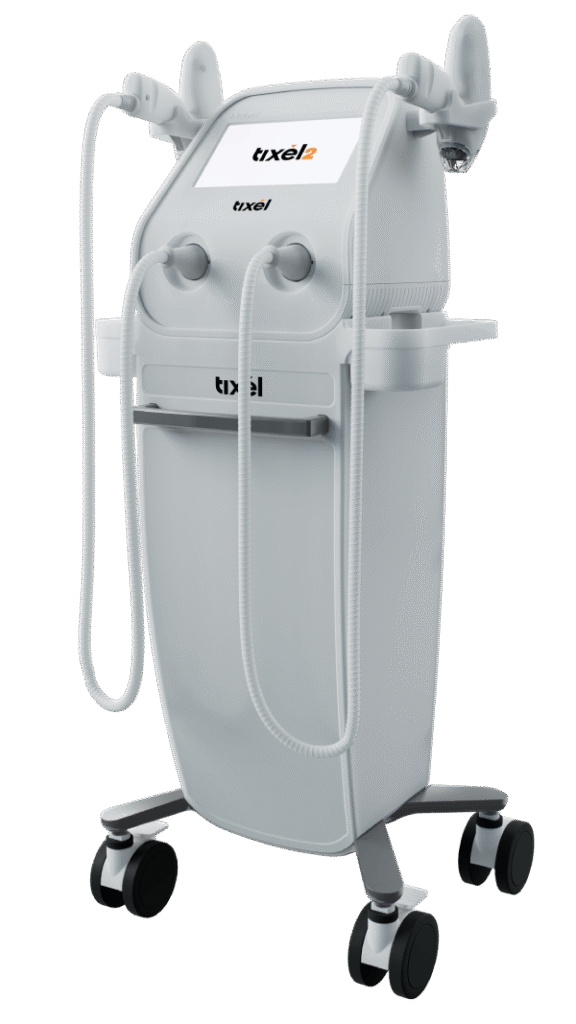
Thermo-Mechanical Action (TMA): System Design
TMA combines controlled tip movement with thermal conduction. The treatment surface consists of a 1 cm² array of pyramid-shaped titanium pins engineered for uniform contact.
Tixel uses precision heating which safely treats all skin types.
Energy Transfer Mechanism
Thermal energy is delivered through contact pulses measured in milliseconds. During each pulse, heat transfers directly from the titanium pins into superficial skin layers.
Short contact duration limits lateral heat diffusion and supports precise control over treatment depth. Because each pulse is consistent in timing and exposure, the system produces a uniform pattern across the treated surface.
Fractional Thermal Effect in Tissue
Each pulse generates a grid of non-ablative coagulation sites. These fractional zones initiate a controlled biological response without removing tissue.
Energy delivery is regulated by the thermal capacity of each pin, limiting excess heat at each contact point and maintaining a stable treatment profile across the skin.
The result is a controlled injury pattern that stimulates regeneration while preserving surrounding tissue architecture.


Micro-Channel Formation
The thermo-mechanical skin treatment creates a matrix of superficial micro-channels within the stratum corneum. These channels mirror the geometry of the titanium tip, ensuring consistent distribution.
Clinical imaging shows these micro-channels can remain open for over 24 hours, allowing temporary access through the outer skin barrier.
This structural effect supports post-treatment interaction with topically applied compounds and forms the basis for combination protocols.
Treatment Consistency Across Skin Types
Tixel technology does not rely on chromophore interaction. Thermal energy is transferred through direct contact, not absorption.
This allows the same treatment parameters to be applied across different skin tones without adjustment. For clinics, this supports protocol standardization and predictable outcomes in Tixel skin treatment.

Tixel 2 and Tixel C Technology
Tixel systems are configured to support different clinical workflows while maintaining identical treatment principles.
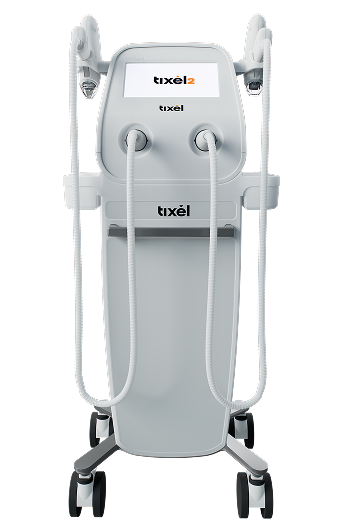

Tixel 2 technology features dual handpieces, allowing immediate switching between treatment modes during procedures. This supports efficiency in high-throughput environments.
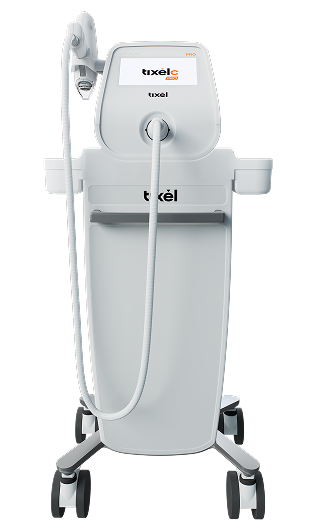

Tixel C technology provides a compact configuration with a simplified interface. It delivers the same thermo-mechanical skin treatment in a streamlined format suited for space-conscious clinics.
Both systems operate on the same TMA platform and produce consistent fractional treatment effects.
Post-Treatment Skin Structure
The controlled thermo-mechanical treatment profile is designed to create consistent fractional effects while preserving surrounding tissue architecture.
This supports consistent skin rejuvenation procedures across different treatment settings.

Bring Tixel Technology Into Your Practice
Evaluate Tixel technology as a controlled, conduction-based system for delivering consistent skin rejuvenation treatments. Integrate Tixel skin treatment into your clinical workflow with defined protocols, stable parameters, and repeatable results across all skin types.